

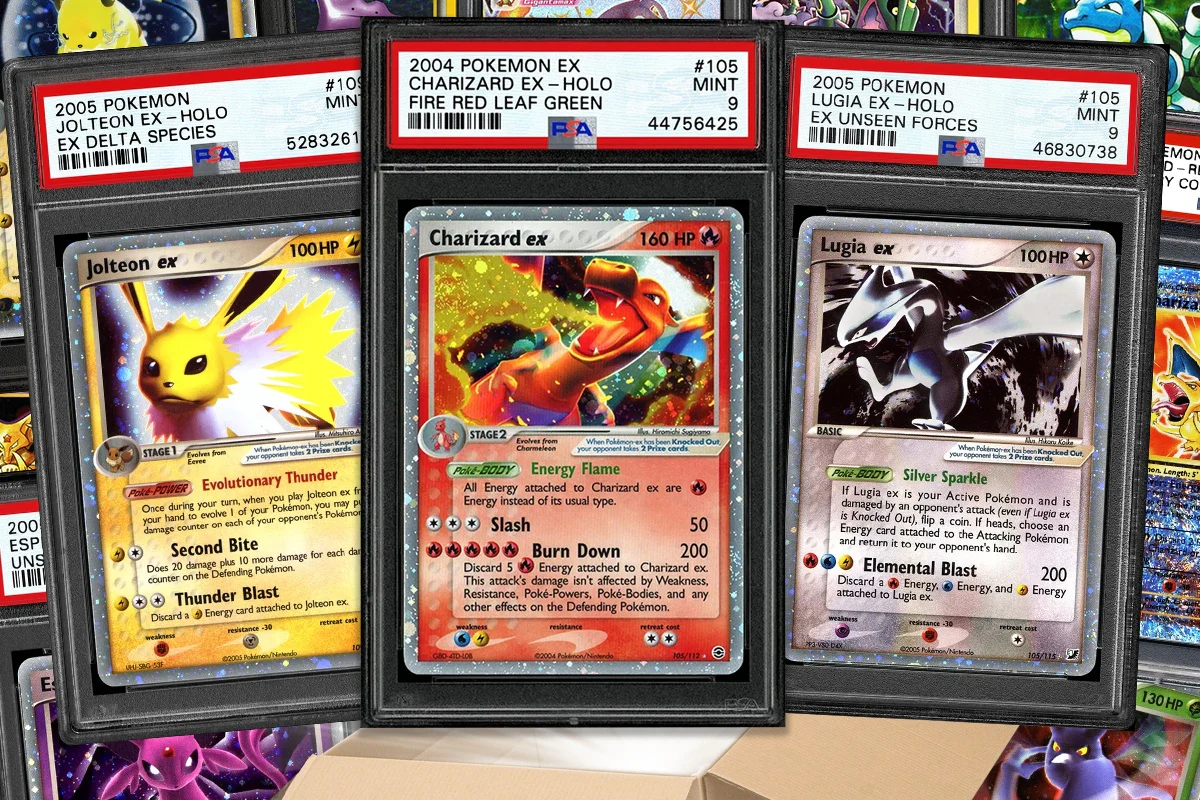
If you’ve been eyeing the grading game for your Pokemon cards, here’s a number worth remembering: 3.15x. That’s the average price jump from a raw Near Mint card to a PSA 10 across modern Pokemon releases from 2020 to 2025.
But that average tells only part of the story. Dig into the data across 62 cards worth $25 or more raw, and a clear pattern emerges—one that could save you money and help you spot the real opportunities.
The Inverse Rule of Grading
Here’s what the market keeps telling us: cheaper cards see bigger grading premiums. It sounds counterintuitive, but the numbers don’t lie.

Cards in the $25–50 range average nearly 4.5x their raw price once they hit PSA 10. Meanwhile, the heavy hitters above $400 barely crack 2.6x.
Why Big-Ticket Cards Underperform
Take the Umbreon VMAX Alternate Art from Evolving Skies. It sells for around $1,400 raw, yet a PSA 10 only fetches about $2,600—just 1.85x. Compare that to the Pikachu Illustration Rare from Pokemon 151, which jumps from $34 to $249, a massive 7.35x multiplier.
Three forces drive this gap.
First, grading volume floods the market. Chase cards like Umbreon get submitted in droves. PSA 10 populations for these cards often exceed 15,000, which dilutes scarcity. Lesser-known cards maintain tighter supply in graded form.
Second, buyer psychology shifts at higher price points. Someone spending $1,400 on a raw card probably knows what they’re doing. They’re comfortable assessing condition themselves. Buyers in the $25–100 range, though, often want the peace of mind that comes with professional authentication.
Third, percentage premiums feel different at scale. Paying $200 extra on a $50 card feels like a steal. Paying $1,000 extra on a $500 card? That stings more, even if the multiplier looks similar.
The Cards Delivering the Biggest Returns
Five cards stand out for grading ROI right now:
The Pikachu Illustration Rare from Pokemon 151 leads at 7.35x. The Charizard ex Special Illustration Rare from Obsidian Flames follows at 7.20x. Gengar ex Full Art from Temporal Forces hits 7.11x. Shining Magikarp from Celebrations reaches 6.20x. And Alakazam ex Special Illustration Rare from Pokemon 151 rounds out the top five at 5.87x.
Notice the pattern? Iconic Pokemon. Moderate raw prices. Artwork that looks stunning behind a slab. These factors combine to create outsized demand for graded copies.
Set-by-Set Breakdown
Surging Sparks (2024) currently shows the strongest multipliers among recent releases, averaging 4.15x across its chase cards. The Pikachu ex and Milotic ex Special Illustration Rares both exceed 4x, making this set worth watching before PSA populations climb.
Pokemon 151 (2023) remains a grading goldmine with an average 5.63x multiplier. Nostalgia for the original 151 Pokemon drives disproportionate demand for slabbed copies from this set.
Evolving Skies (2021) shows the weakest multipliers despite housing the most valuable modern cards. The Eeveelution alternate arts average just 1.67x to 2.14x. These cards make sense for long-term collectors, not grading arbitrage.
Card Types That Punch Above Their Weight
Illustration Rares deliver the highest premiums at 5.74x average, led by that Pikachu at 7.35x. Full Art Trainers featuring popular characters like Iono, Miriam, and Carmine maintain solid 3–4x multipliers thanks to dedicated character collectors.
Special Illustration Rares—the core chase cards in modern sets—average 3.32x. Respectable, but not spectacular.
Alternate Arts from the VMAX era bring up the rear at 2.35x. They’re already expensive raw, leaving less room for grading to add proportional value.
The Smart Play
If you’re looking to maximize grading ROI, target cards in the $25–75 raw range featuring fan-favorite Pokemon. Pikachu, Charizard, and Gengar consistently command premium multipliers. Nostalgic sets like Pokemon 151 and Celebrations outperform newer releases.
Timing matters too. Get cards graded before PSA populations explode. Once a card has 10,000+ PSA 10s floating around, that scarcity premium evaporates.
For expensive chase cards like the Evolving Skies alternate arts or Giratina V from Lost Origin, grading makes sense for preservation and authentication—not for flipping. The market has already priced in their desirability.
The grading premium rewards cards accessible to casual collectors, not whales. Keep that in mind, and the numbers start working in your favor.



