

The Pokémon Trading Card Game secondary market just experienced a wild 24 hours. While some collectors might assume the entire market is heating up, the reality is far more nuanced—capital is moving fast, but it’s flowing into very specific cards rather than lifting all boats.
If you’re looking to make smart buying decisions in this volatile environment, understanding what’s actually driving these price spikes is crucial. Here’s what happened and what it means for your collection.
The Big Picture: Targeted Buying, Not Market-Wide Growth
Recent data from TCGPlayer’s Near Mint Market Price tracking reveals something fascinating: roughly 60% of significant price jumps are driven by genuine competitive demand from tournament play, while 40% result from aggressive speculative buyouts targeting cards with shallow inventory.
This matters because these two drivers produce very different outcomes. Tournament-driven spikes tend to hold their value as long as the card remains competitive. Speculative buyouts? Those often collapse within 48 hours once sellers notice the price jump and list their inventory.
The Top Movers
Over the past day, ten cards saw dramatic price increases ranging from 27% to nearly 70%. Here’s what actually moved:
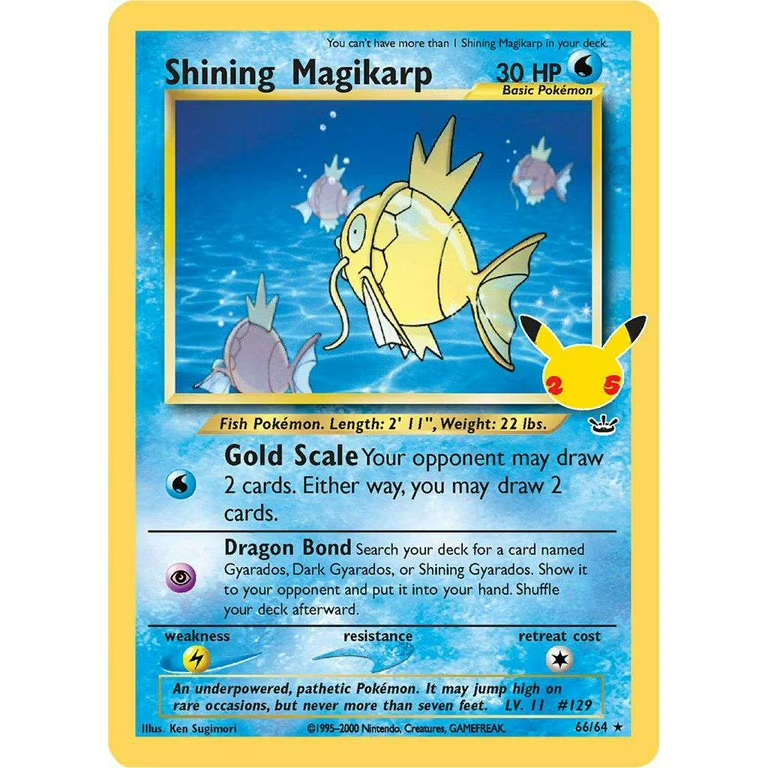
Shining Magikarp from Celebrations rocketed up $19.06 to hit $65.98—a 40.6% gain. This wasn’t organic growth. Analysis shows the average buyer grabbed 10.6 copies during the spike, the classic signature of a coordinated buyout exhausting Near Mint supply.
Mew from Crown Zenith’s Galarian Gallery jumped $20.43 to $62.65, up 48.4%. This one makes sense—Crown Zenith was the final set of the previous generation, and collectors are increasingly betting on future scarcity as sealed product dries up.
Pecharunt-129, a PC-exclusive promo, exploded 69.5% from $30 to $50.86. Promotional cards with limited distribution are prime targets because the supply is fixed. Once the Near Mint copies sell out, there’s no restock coming.
Lower-dollar cards also saw impressive percentage gains. Dedenne from Forbidden Light jumped 44.6% to $10.01, likely driven by renewed competitive utility. Pidgey Illustration Rare from Obsidian Flames gained 33.3% to $8, and Toxicroak from Sword & Shield base rose 30.4% to $1.20—both showing signs of competitive play driving demand.
Three Types of Spikes—Three Different Strategies
Understanding why a card spiked determines whether you should buy, sell, or stay away entirely.
Competitive Demand: Cards like Toxicroak and Dedenne are moving because players need them for tournament-viable decks. These gains tend to stick around until the card rotates out of format or gets powercrept. If you’re buying, verify the card actually sees competitive play and check when it rotates out of Standard format.
Speculative Buyouts: When you see massive 24-hour gains with high copies-per-buyer metrics, that’s typically investors clearing out supply to flip for profit. Shining Magikarp’s spike fits this profile perfectly. If you own these cards, sell immediately. If you’re thinking of buying, wait 2-3 days for the inevitable correction when sellers list their inventory.
Scarcity Plays: Promotional cards and anniversary set items like the Victini XY117 promo (up 44.3% to $50) represent legitimate long-term holds. The supply is genuinely constrained, and with Pokémon’s 30th anniversary approaching in 2026, these cards could see sustained appreciation.
Warning Signs in the Broader Market
While these ten cards surged, high-end chase cards are actually dropping. Team Rocket’s Mewtwo ex from Destined Rivals recently fell below $500 for the first time, closing at $489. Team Rocket’s Moltres ex dropped from $138 to $126.
This tells us something important: sophisticated collectors are taking profits on expensive cards, possibly signaling that some premium assets feel overheated. When flagship cards decline while niche items spike, that’s often a sign of speculative excess rather than healthy market growth.
How to Navigate This Volatility
If you’re selling: Cards that spiked due to buyouts need to be listed immediately at the new price point. You have 24-48 hours before the window closes and prices normalize.
If you’re buying for competition: Verify the card’s actual tournament results before paying inflated prices. Check recent major event decklists and confirm the card’s rotation timeline. Competitive cards losing Standard legality within six months are risky buys.
If you’re investing long-term: Focus on promotional cards with documented scarcity and anniversary-set cards likely to benefit from nostalgia. Avoid chasing yesterday’s spikes—by the time you hear about a buyout, you’re already too late.
If you’re hunting deals: Wait 3-5 days after major spikes. Many speculative moves reverse quickly, creating buying opportunities when the hype fades and sellers compete for buyers.
The Bottom Line
Today’s Pokémon TCG market rewards speed and information. The cards that surged yesterday might crash tomorrow, while cards nobody’s watching could be next month’s movers.
The smartest approach? Don’t chase spikes. Instead, understand the three core drivers—competitive utility, buyout speculation, and genuine scarcity—and position accordingly. Buy competitive staples when they’re undervalued before major tournaments. Accumulate scarce promos during quiet periods. And when you see a card spike 40% overnight with suspicious buying patterns, resist FOMO.
The market always offers opportunities. The key is knowing which price movements signal real value and which are just noise.



